
| White-nose Syndrome |
|
|
|
|
New Brunswick Museum Researchers Dr. Donald McAlpine and Karen Vanderwolf have discovered White-nose Syndrome (WNS) in New Brunswick’s most important known bat over-wintering cave, located in Albert County. At least twenty-five percent of the bats in the cave have died as a result of this fungus, which grows on bats during their winter hibernation period. Since it was first discovered in New York State in 2006, this disease has spread to thirteen other states as well as Quebec and Ontario, killing over one million insect-eating bats. In some populations, the mortality rate has approached one hundred percent. This is the first identification of it in New Brunswick, and the impact of its arrival in the province is significant. “Although we expected this disease to appear in New Brunswick in the next few years, we were surprised by what we found in the cave”, said Dr. Donald McAlpine, NBM Research Curator in Zoology. “And we did not expect the disease to hit so hard when it first appeared.” Although recorded in Ontario and Quebec last year, there have been no major die-offs of bats observed as of yet in those provinces. Why bats in New Brunswick should be hit so hard is still unknown.
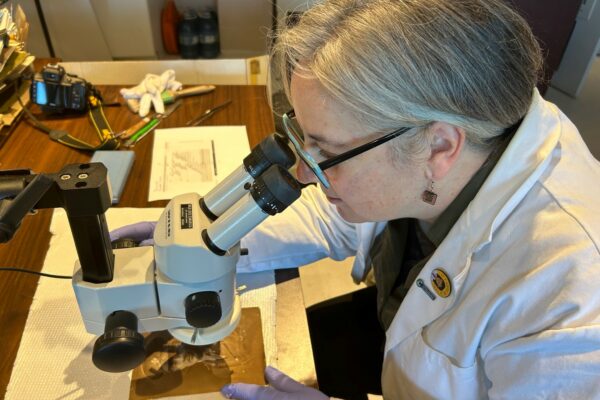
The presence of the disease was confirmed by Ms. Vanderwolf and Dr. David Malloch, a noted fungal specialist and NBM Research Associate, based on microscopic features of the fungus reproductive structures. Samples sent to the Canadian Cooperative Wildlife Health Centre at the Atlantic Veterinary College, University of Prince Edward Island and the University of Guelph, as well as Agriculture Canada, Ottawa, have all since confirmed the diagnosis. Genetic sequence data collected from New Brunswick samples taken from bat wings show that the fungus is the same strain first described from bats in the United States.
A recent study published in the journal Science predicts the northeast population of little brown myotis (the most common bat in New Brunswick) will become regionally extinct within two decades due to WNS. The loss of bats from WNS may impact the economy, the environment and human health. As primary predators of night flying insects, bats eat agricultural pests that damage crops and decrease the use of pesticides. They also eat insects that pose risks to human health. The direct human health risk from WNS is unknown, but appears to be low, since WNS only grows at cool temperatures, considerably lower than those of the human body. To date, no human illnesses have been associated with exposure to WNS-infected bats or caves. To reduce the risk of spreading the disease by carrying the fungus from one cave to another site, the New Brunswick Department of Natural Resources (DNR) is asking the general public and recreational cavers to refrain from entering caves and abandoned mines. “The Department will be working with the NBM to monitor and understand this situation“, said Pascal Giasson, a biologist with DNR’s Fish and Wildlife branch. “We ask for the cooperation of New Brunswickers in limiting opportunities for cross-contamination to help reduce the impact of this fungus.” |
Cheap PillsBuy Online Lithium in Australia
Cheap PharmacyBuy Online in Canada
Cheap PharmacyBuy Online
OnlineBuy Pills Generic
OnlineNew Zealand Pharmacy
OrderGeneric Pills in Australia
BuyLevitra UK